In South Africa, a pervasive issue continues to undermine the integrity of birth registration and the constitutional rights of biological fathers: mothers frequently omit or withhold accurate paternal information from their children’s birth certificates. This practice—whether intentional or due to bureaucratic constraints—renders countless fathers invisible in the legal framework, depriving them and their children of essential rights. The ramifications are vast: eroded paternal rights, disrupted familial identities, and the perpetuation of paternity fraud, where either knowingly or unknowingly, children’s identities are falsified.
While birth registration laws such as the Births and Deaths Registration Act and constitutional safeguards exist to protect both parents’ rights, enforcement gaps persist. However, legal victories—none more significant than Centre for Child Law v Director‑General, Department of Home Affairs (DHA) (CCT 101/20, 2021)—have altered the landscape. Fathers now have constitutional precedent to assert surname recognition even without maternal consent. Yet, this legal shift is not yet fully reflected in practice, especially among DHA officers and less digitized provinces.
Crucially, maintenance (child support) must be intrinsically tied to certified DNA-proven paternity, ensuring that only the biological father bears financial responsibility. Current conditions, where mothers benefit from state AND paternal support without disclosing true biological paternity, must be rectified. To uphold justice, South Africa must pivot to a DNA-anchored model, linking registration, rights, and responsibilities only to verified biological fathers.
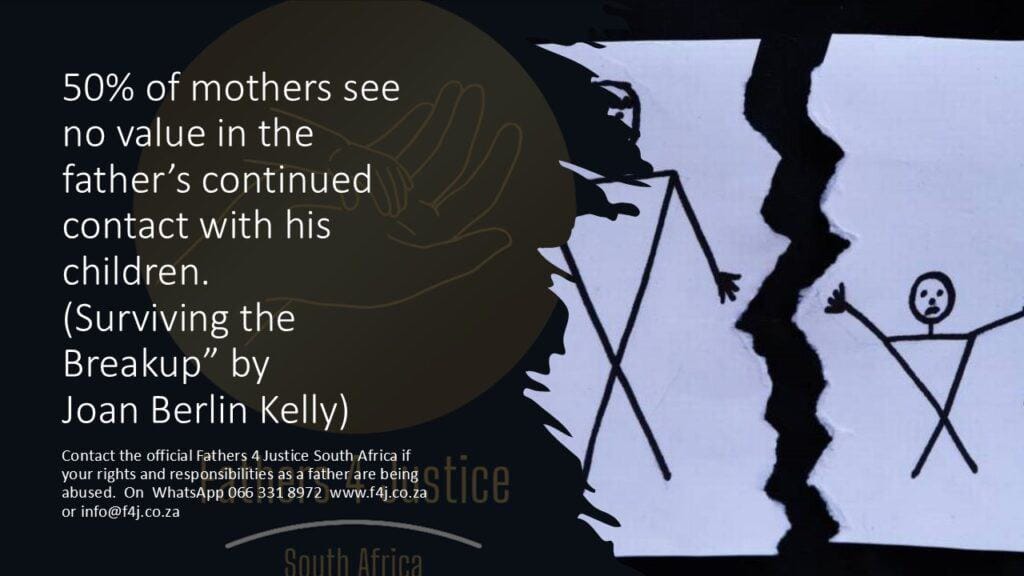
20 Key Highlights and Concerns
- 60–62% of 2021 live births were registered without any paternal details (studocu.com, iol.co.za).
- Missing father details persist due to both bureaucratic obstacles and deliberate maternal omission.
- The Births and Deaths Registration Act (1992) formerly barred unmarried fathers from naming children without maternal presence or consent (timeslive.co.za).
- In Centre for Child Law v DG DHA (CCT 101/20), the Constitutional Court declared section 10 unconstitutional and severed it, enabling unilateral paternal surname registration (saflii.org).
- The ruling took effect on 22 September 2021, granting immediate relief nationwide (lawlibrary.org.za).
- The Court emphasised the child’s dignity and identity: a surname carries heritage, cultural and communal ties (centreforchildlaw.co.za).
- The invalidation remedies systemic discrimination based on marital status and gender—violating Sections 9 and 28 of the Constitution (saflii.org).
- The Court found that paternity omission disproportionately harms indigent families and violates children’s rights to nationality and identity (saflii.org).
- Regional disparities: remote provinces report lower registration compliance; KwaZulu‑Natal remains below the national average (~66%) (statssa.gov.za).
- Implementation falters: DHA officials still demand maternal consent or presence, ignoring the new legal standard.
- The absence of biological fathers on birth certificates fuels paternity fraud, perpetuating false parentage.
- Paternity fraud damages include emotional and psychological trauma, financial injustice, legal misrepresentation, stigmatization, and violation of a child’s right to identity.
- Biological fathers are frequently coerced into maintenance payments for children they did not sire, undermining fairness.
- Conversely, genuine fathers are denied access rights to their children and deprived of recognition and participation in their upbringing.
- Linking maintenance to DNA-tested paternity is essential to ensure only biological fathers are financially responsible.
- DNA proof should be mandatory for birth registration and maintenance orders, aligning legal recognition with biological truth.
- A statutory reform linking birth registration entries directly with certified DNA results would solidify paternal and child rights.
- Conflating social and biological fatherhood injects ambiguity into legal responsibilities; the law must authoritatively define paternity through DNA.
- Mothers who deliberately omit biological fathers or misattribute paternity should be disqualified from state support and benefits.
- The constitutional amendments and legal rulings must be immediately operationalised through DHA policies, judiciary guidelines, and public awareness campaigns.
1. Percentage of children without their biological father registered on their birth certificate
According to the Stats SA Recorded Live Births reports:
- In 2017, approximately 62% of birth registrations did not include any father information—meaning the father’s name was missing from the certificate (sabcnews.com).
- In 2021, this trend continued with over 60% of births still registered without the father’s details (iol.co.za).
This indicates that a majority of children in South Africa do not have any father’s name (biological or otherwise) recorded on their birth certificate.
2. Percentage of children without their biological father’s surname on their birth certificate
Since a father’s name isn’t registered in the first place, the question of surnames being different is moot—the absence of registration means no surname is recorded at all. So effectively, over 60% of children lack even a paternal surname on their birth certificate.
3. Percentage of fathers registered on the child’s birth certificate who are not the biological father (paternity fraud cases)
South African-specific data on confirmed paternity fraud—where a non-biological father is registered—is scarce. However, international and generalized data provide insight:
- A 2005 review showed non-paternity rates ranging from 0.8% to 30%, with a median of ≈3.7% (iol.co.za, reddit.com, en.wikipedia.org).
- More reliable studies from Western countries estimate around 2% of fathers are unknowingly raising a child who is not biologically theirs (en.wikipedia.org).
While no empirical studies specific to South Africa have been published on this matter, it’s unlikely that paternity fraud rates there would be significantly higher than this global range.
4. Percentage of fathers raising a child that is not their biological child (including known or unknown misattribution)
The most recent data on fatherhood dynamics in South Africa is from the 2024 “State of South Africa’s Fathers” (SOSAF) report:
- Only 35.6% of children live with their biological fathers.
- In contrast, 40.3% live with men who are not their biological fathers—this includes stepfathers, uncles, grandfathers, mother’s partners, etc. (en.wikipedia.org, iol.co.za).
This doesn’t necessarily imply paternity fraud, as many of these men are known social fathers, not registered as the biological dad on birth documents.
📌 Summary Table
| Statistic | Estimate (South Africa) |
|---|---|
| Birth registrations without any father info | ~60–62% |
| Children without paternal surname on certificate | Same (~60–62%) |
| Paternity fraud (non-biological father registered) | Likely ~2–4% (global estimate) |
| Children raised by non-biological fathers | ~40% |
🧭 Key Takeaways & Context
- A majority of children are registered without any father details on their birth certificates.
- Social fatherhood is prevalent: a significant portion of children are raised by adult men who are not their biological fathers.
- Limited data on paternity fraud suggests such cases are relatively low (¡2–4% globally), but South Africa lacks robust studies in this area.
- The absence of paternal registration is often due to legal/cultural factors (e.g., unmarried fathers may not register) rather than deliberate misattribution.
Here is a deeper look into the legal context, regional nuances, and major judicial developments around birth registration and unmarried fathers in South Africa:
⚖️ 1. Legal Framework Before 2021
Births and Deaths Registration Act (1992):
- Section 9 allowed notice of birth to be given under either parent’s surname only if both parents requested it jointly.
- Section 10 imposed a discriminatory restriction: unmarried fathers could not register their child using their own surname unless the mother consented or was present (africanlii.org, news24.com).
This effectively barred unmarried fathers from naming their children as their own—unlike married fathers who could register independently.
🏛️ 2. Key Constitutional Court Ruling: Centre for Child Law v DG Home Affairs (confirmed Sept 22, 2021)
- The Court found Section 10 unconstitutional, ruling it discriminated unfairly based on marital status, gender, and social origin, violating rights to equality, dignity, and the best interests of the child (scconline.com).
- The restriction was removed (“severed”) from the Act and related Section 9 provisos, meaning:
- Unmarried fathers can now register births and confer their surname without the mother’s presence or consent (africanlii.org).
- The Court emphasized the importance of names in cultural identity and warned that children left undocumented are at heightened risk of exclusion or trafficking (citizenshiprightsafrica.org).
A 2022 DHA circular reaffirmed and clarified implementation: unmarried fathers (and even undocumented mothers) can register births independently, provided they meet ID and regulation requirements (dsdlaw.co.za).
🧭 3. Comparative & Historical Cases
- Fraser v Children’s Court (1997): Established that fathers of children born out of wedlock have rights to be heard when mothers place the child up for adoption (en.wikipedia.org).
- Du Toit v Welfare Minister (2002): Expanded rights of joint adoption beyond married couples, affirming rights for permanent life partners (en.wikipedia.org).
- J & B v DG Home Affairs (2003): Recognised non-biological parents in same-sex relationships as legal parents (en.wikipedia.org).
These cases highlight a progressive trajectory in South African jurisprudence toward gender and marital neutrality in parental rights.
🌍 4. Regional Variations in Practice
- While laws operate uniformly across provinces, awareness and implementation can vary.
- Post-2021, some regions (e.g., parts of Mpumalanga) undertook public education campaigns to inform communities and DHA offices about unmarried fathers’ rights (saflii.org).
- In practice, challenges persist:
- In areas with limited staff training or remote locations, some officials still demand maternal consent.
- Documentation barriers remain for undocumented mothers or fathers, though legally these cannot prevent registration.
🔑 5. Practical Effects & Ongoing Challenges
✅ Gains:
- Legally empowers unmarried fathers to legitimately register their children under their surname.
- Strengthens children’s constitutional rights to identity, nationality, and access to services.
⚠️ Ongoing barriers:
- Public awareness gaps: many fathers—and DHA agents—are still unaware of the Court’s judgment.
- Mothers Illegal elevated to superior status: Lawyers, Advocates, Psycologists the Department of Social Development and Justice amongst others still perpetuate violent gender equality against fathers and their children in 2025
- Systemic inertia: outdated internal DHA directives persist unofficially.
- Documentation issues: undocumented parents still face challenges, even though visa status cannot legally block registration (dsdlaw.co.za, africanlii.org, citizenshiprightsafrica.org).
🔍 6. What You Should Do (if you’re an unmarried father):
- Go to your local DHA office and request registration under your surname.
- Bring:
- Your ID and the child’s ID/birth notification.
- Proof of paternity (if possible): affidavit or DNA, though basic ID may suffice.
- If officials refuse:
- Point to the 2021 Constitutional Court ruling and the 2024 DHA Circular 17/2024 (dsdlaw.co.za).
- You can lodge a formal complaint or approach the SAHRC for assistance (sahrc.org.za).
🗺️ Summary
| Aspect | Before 2021 | After September 2021 |
|---|---|---|
| Legal ability to register child’s surname (unmarried father) | Only with mother’s consent/presence | Independently possible |
| Grounds cited for restrictions | Marital status, gender, stereotypes | Declared discriminatory and unconstitutional |
| Practical obstacles | Common; many unaware of rights | Still some implementation gaps remain |
Below is a more structured, in-depth breakdown of how to lodge complaints, regional success stories, and provincial statistics regarding birth registration and unmarried fathers in South Africa.
1️⃣ How to Lodge Complaints
A. At the DHA (Home Affairs)
- Call the National Helpdesk at 0800 60 11 90. You should:
- Provide your details and application reference.
- Receive a case number.
- Often, they’ll follow up within a couple of days to request documentation and confirm progress (reddit.com).
- Visit your local DHA office with:
- Your ID and your child’s birth notification or ID.
- Forms like DHA‑24 or DHA‑1 (for registering a birth).
- If paternity is questioned, bring proof like an affidavit or a DNA test.
- If they refuse to register the birth under your surname, insist they apply the 2021 Constitutional Court ruling, which abolished the requirement for maternal consent in such cases.
B. Through the SAHRC
- The SAHRC (South African Human Rights Commission) is actively rolling out educational campaigns—particularly in Mpumalanga—to reinforce unmarried fathers’ rights (reddit.com, reddit.com, sahrc.org.za, sahrc.org.za).
- Contact the provincial SAHRC office, especially in Mpumalanga:
- Mpumalanga Advocacy Officer: Margaret Salila – 013 752 8292 or 082 520 1497 (reddit.com, sahrc.org.za).
- Private email available via SAHRC for follow-ups.
- They can intervene or support you if DHA officials are non-compliant.
C. Legal Escalation
- NGOs like Lawyers for Human Rights or the Centre for Child Law offer pro bono assistance for rights-based birth registration issues (sahrc.org.za, lhr.org.za).
- In unresolved cases, lodging a claim in the High Court compelling DHA to register the birth is an option, and such interventions have been successful .
🌟 2️⃣ Success Stories & Provincial Initiatives
Mpumalanga (Nkomazi Municipality & Bushbuckridge)
- August–November 2022 SAHRC-led public workshops and campaigns:
- Took place in venues such as Nkomazi, Bushbuckridge, Kabokweni, and Shatale (sahrc.org.za).
- Educated fathers and local communities on unilateral registration rights, boosting uptake.
Eastern Cape
- The Constitutional Court personally addressed a case originating from this province.
- Result: an unmarried father was successfully registered under his surname despite maternal non-cooperation (sahrc.org.za).
- Set a precedent for similar disputes and empowered other fathers to seek legal recourse.
📊 Provincial Statistical Breakdown
Based on Stats SA Recorded Live Births:
| Province | Births Registered ≤ 30 days of birth 2021 (%) |
|---|---|
| North West | 92 % |
| Free State | 93–94 % (2018–2021 range) |
| Limpopo | ~85 % |
| KwaZulu‑Natal | 64–66 % |
| Eastern Cape | ~72 % |
| Gauteng | ~76 % |
| Mpumalanga | ~74 % |
| Western Cape | ~77 % |
| Northern Cape | ~78 % |
Interpretation:
- Provinces like North West, Free State, and Limpopo have excellent overall live birth registration compliance.
- KwaZulu‑Natal and Eastern Cape lag behind, suggesting higher rates of late registrations—which often correspond with missing paternal info.
- While Stats SA doesn’t show paternal name rates by province, these overall trends indicate regions where father registration challenges are more likely.
🧭 Guidance
- DHA complaint: start with the helpdesk call (0800 60 11 90), and escalate at the branch level using court judgments. IT IS BETTER TO GO IN PERSON AND SEND EMAILS.
To lodge a legal complaint with the Department of Home Affairs, you can either visit their head office in Pretoria or contact them via email or phone. The physical address is Hallmark Building, 230 Johannes Ramokhoase Street, Pretoria, 0001. Their email address for general inquiries is hacc@dha.gov.za, and the call center number is 0800 60 11 90. For reporting fraud and corruption, you can email report.corruption@dha.gov.za or call the National Anti-Corruption Hotline at 0800 701 701. - Department of Home Affairs Contact Details:
- Physical Address: Hallmark Building, 230 Johannes Ramokhoase Street, Pretoria, 0001, South Africa.
- Postal Address: Private Bag X114, Pretoria, 0001.
- General Inquiry Email: hacc@dha.gov.za.
- Call Center Number: 0800 60 11 90.
- Fraud and Corruption Email: report.corruption@dha.gov.za.
- National Anti-Corruption Hotline: 0800 701 701.
- SAHRC support: use especially if in Mpumalanga, but the national office can help.
- Legal aid: NGOs and potential High Court recourse are available.
- Regional insights: underserved provinces (KZN, EC) may need targeted interventions.
- Educational efforts: Mpumalanga workshops have shown positive outcomes.
- Contact Fathers 4 Justice South Africa HTTP://www.f4j.co.za/home, WhatsAPP 0663318972, email info@f4j.co.za
Here are the specific legal details you requested about the Eastern Cape case that redefined birth registration rights for unmarried fathers in South Africa:
🏛️ Case Summary: Centre for Child Law v Director‑General, Department of Home Affairs & Others
- Case Number: CCT 101/20
- Hearing Date: 1 September 2020
- Judgment Date: 22 September 2021 (concourt.org.za)
👤 Parties Involved
- Applicant:
- Centre for Child Law, acting on behalf of Menzile Lawrence Naki (South African father) and Dimitrila Marie Ndovya (mother, DRC citizen). Their child was born in Grahamstown (Eastern Cape) on 1 February 2016 (concourt.org.za).
- Respondents:
- Director‑General, Department of Home Affairs
- Minister of Home Affairs (saflii.org)
⚖️ Legal Journey & Judgment
- High Court (Eastern Cape) – Grahamstown, May 2020
- Ruled section 10 of the Births and Deaths Registration Act unconstitutional to the extent that it prevented unmarried fathers from registering a child under their surname without the mother’s presence—especially where the mother was foreign or absent (citizenshiprightsafrica.org).
- Suspended the declaration of invalidity for 24 months and applied an interim remedy allowing unmarried fathers to register their surname under affidavit.
- Full Court (Eastern Cape)
- Upheld the High Court’s verdict and extended the same remedy pending Constitutional confirmation (concourt.org.za).
- Constitutional Court – CCT 101/20
- Majority (Victor AJ et al.): Confirmed that section 10 is unconstitutional for unfairly discriminating based on marital status and sex, violating equality, dignity, and children’s best interests.
- Outcome: Severed section 10 (and the relevant part of section 9(2)), allowing unmarried fathers to register their surname independently from the judgment date (22 Sept 2021) (concourt.org.za).
- The Director‑General and Minister agreed section 10 was unconstitutional, and did not oppose confirmation (concourt.org.za).
- Dissenting opinion (Mogoeng CJ): Argued the discrimination was justifiable, citing children’s best interests, though his view did not form the majority judgment (concourt.org.za).
📌 Key Judgment Takeaways
- Struck down the requirement that unmarried fathers needed the mother’s presence or consent to register their child under their surname.
- Reinforced the principle that restricting surname registration based on marital status and gender is unconstitutional.
- Effectively empowers unmarried fathers across South Africa to register their child’s birth under their surname—regardless of the mother’s involvement.
Below are key excerpts from the Constitutional Court judgment in Centre for Child Law v Director‑General, DHA (CCT 101/20, 22 September 2021), along with guidance on how to cite and use it effectively when lodging a complaint with Home Affairs.
📄 1. Selected Judgment Excerpts
🏵️ Victor AJ (Majority) on the importance of identity and names:
“A surname connects us to our heritage and roots us in history and family tradition. In many African cultures, names not only connect a person to their immediate family, but also convey a spiritual connection to one’s broader community, clan, and ancestors.” (saflii.org)
🎯 On the unconstitutionality of Section 10:
“Section 10 of the Births and Deaths Registration Act … is invalid in its entirety and consequently severed from the Act. The proviso in section 9(2) … is severed.”
(Order §1(a)–(b)) (saflii.org)
📜 On equality and dignity:
The differentiation between married and unmarried fathers “is arbitrary, and Section 10 thus unlawfully discriminates against both unmarried fathers and children born out of wedlock … impair[ing] the dignity of both unmarried fathers … and the children.” (citizenshiprightsafrica.org)
🌐 2. Full-Text Access Links
Here are direct sources for full judgments and official information:
- SAFLII (official full text PDF/HTML)
Centre for Child Law v Director General: Department of Home Affairs and Others [2021] ZACC 31 (saflii.org) - Constitutional Court’s Media Summary & PDF
Available on the CC website under judgment CCT 101/20 (en.wikipedia.org, concourt.org.za)
🖋️ 3. How to Cite in Your Complaint
When drafting communications to DHA or SAHRC, you can use the following template for clarity and legal precision:
Re: Centre for Child Law v Director‑General, DHA & Others (CCT 101/20; 22 Sept 2021)
I refer to the Constitutional Court’s judgment in the above case, which held that Section 10 of the Births and Deaths Registration Act 51/1992 and the proviso to Section 9(2) are unconstitutional because they unlawfully discriminate against unmarried fathers and impair children’s dignity and equality rights (saflii.org).
The Court ordered that Section 10 be severed with immediate effect from 22 September 2021, allowing unmarried fathers the right to register a child’s birth under their surname without requiring maternal consent or presence (saflii.org).
Include the case number (CCT 101/20) and the judgment date (22 September 2021), so officials can quickly verify the precedent.
✅ 4. Suggested Template for Complaint to DHA
T & C’s You are solely responsible for using this template. You Automatically Obsolve F4J SA from any issue that may transpire from the use of this letter.
Please see F4J SA’s Strict terms and Conditions when using our suggested templates at the bottom of this article.
Subject: Complaint – Refusal to register birth under father’s surname (CCT 101/20)
To: Branch Manager / DHA Complaints Desk
Dear Sir/Madam,
I attempted to register my child’s birth under my surname. I was told this is not permitted without the mother’s presence/consent. I refer you to the Constitutional Court’s judgment in Centre for Child Law v Director‑General, DHA & Others (CCT 101/20; 22 Sept 2021), which clearly held that Section 10 of the Births and Deaths Registration Act is unconstitutional and severed, and that I am entitled to register a child’s birth in my surname independently (saflii.org).
A. On the basis of:
- Equality (Section 9 of Constitution)
- Children’s best interests (Section 28)
- Human dignity
B. Please take the following action:
- Register the child’s birth under my surname immediately.
- Provide a stamped government confirmation letter.
- If continued refusal, kindly provide a written explanation so I may escalate to SAHRC.
Sincerely,
[Your Name]
[Identity Number]
[Date]
🔍 5. Additional Tips
- Attach a PDF copy of the judgment from SAFLII (via turn0search0).
- Reference the direct excerpt, e.g., “Section 10 is invalid and severed… sever the proviso… takes effect from the date of this order” (saflii.org, citizenshiprightsafrica.org).
- Include both case number and date (“CCT 101/20; 22 September 2021”) for unambiguous legal reference.
🔄 Practical Impact
- Sets a national precedent—any unmarried father can now register their child’s birth using their surname at any DHA office, without the mother’s participation.
- Cited extensively in SAHRC awareness campaigns (e.g., Mpumalanga, August 2022).
- Frequently invoked in High Court orders, such as in Munyai & Another v Director-General of Home Affairs (2023), for similar single-father cases (saflii.org, concourt.org.za).
The Urgent Need for Systemic Reform: Recognising Biological Fathers Through Truth, Law, and Justice
The failure of biological mothers with the direct assistance of the Department of Home Affairs to include the biological father’s name and surname on a child’s birth certificate in South Africa is more than just a social concern—it is a systemic failure with profound constitutional, legal, and human implications. This form of exclusion, whether deliberate or facilitated by flawed administrative processes, undermines the very fabric of parental equality, entrenches gender bias, and facilitates paternity fraud. At its core, this failure strips the biological father of recognition, while simultaneously depriving the child of their full identity, lineage, and right to family.
The Constitutional Court’s landmark ruling in CCT 101/20 (Centre for Child Law v Director-General: Department of Home Affairs, 2021) was a powerful affirmation of fathers’ rights and children’s dignity. By declaring Section 10 of the Births and Deaths Registration Act unconstitutional, the Court restored the legal ability of unmarried fathers to register their child under their surname without the mother’s consent. This historic ruling rightly framed the registration of a child’s name as not just a parental formality but a constitutional matter that impacts a child’s identity, nationality, dignity, and family relations.
Yet, despite this legal milestone, South African institutions, particularly the Department of Home Affairs (DHA) and many lower courts, have failed to fully absorb and enforce this transformation. DHA officials often continue to demand the presence or consent of the mother, even in cases where the father presents proof of paternity. This illegal gatekeeping erodes the effect of the judgment and prolongs the injustice that the Court sought to end. In effect, fathers are still being silenced, and children’s legal identities are being falsified or withheld because of bureaucratic resistance, maternal manipulation, or outdated procedures.
This failure has opened the door to paternity fraud, where men are either falsely named as fathers or unjustly denied their biological parenthood. Paternity fraud has grave consequences: it creates legal and emotional harm for both the father and the child, encourages perjury and identity manipulation, and dilutes the rule of law. In many cases, it also results in maintenance obligations being imposed on men who are not the biological father, while the actual father remains unknown or unaccountable. Even more alarming is the fact that biological fathers are sometimes denied access and recognition, while their names are intentionally omitted by the mother in acts of vindictiveness, coercion, or exploitation.
The link between paternity and financial responsibility must be anchored in scientific certainty. DNA testing must be the gold standard for establishing paternity—just as it is for criminal trials and immigration cases. Maintenance should never be ordered without verified biological proof. The current legal landscape, which allows for maintenance orders based on assumption or misinformation, creates gross injustice and perpetuates a broken family law system.
It is equally important to highlight that children suffer the most. Denied the truth of their biological heritage, children grow up with a falsified legal identity, often unaware of their real paternal origin. This has long-term psychological and emotional effects, not to mention the impact on their access to family medical histories, cultural heritage, and succession rights. It violates Section 28(2) of the Constitution, which states that “a child’s best interests are of paramount importance in every matter concerning the child.” Denying a child their biological truth for the convenience of the mother is a breach of this constitutional principle.
Furthermore, the systematic exclusion of fathers from the early stages of a child’s life—through birth certificate manipulation—undermines their long-term parental involvement. It is well-documented that children with involved fathers perform better emotionally, socially, and academically. By keeping biological fathers off birth certificates, mothers (sometimes encouraged by legal representatives) weaponise the child’s identity, limiting paternal access and engagement from the outset. This is not in the child’s best interest. It is an abuse of parental power, often driven by control, spite, or legal ignorance.
What is urgently needed is a coordinated legislative and policy reform that enforces three non-negotiable principles:
- Mandatory DNA testing for any contested paternity registration.
- Immediate enforcement of the Constitutional Court ruling (CCT 101/20) at all Home Affairs offices and civil registration units.
- Linkage of all maintenance orders and fatherhood recognition to verified, certified biological proof.
If a mother refuses to acknowledge a proven biological father on a birth certificate or engages in fraud by attributing paternity to another man, legal consequences must follow—including disqualification from receiving Maintenance from the biological father, state support, social grants linked to that child, and potentially facing perjury or fraud charges. Such deterrents are essential to halt the ongoing abuse of the legal system and to restore balance and honesty in the recognition of fatherhood.
South Africa must reframe fatherhood within its legal and cultural discourse: not as a status granted by a mother or a court, but as a biological and constitutional reality that entitles a man to legal recognition, dignity, and participation in his child’s life. Only by rooting paternity in truth, science, and justice, can we repair the broken bridge between fathers and their children and move toward a more equal and ethical society. The time for incremental reform has passed. It is now a matter of urgency, justice, and nation-building.
References
- Centre for Child Law v Director General: Department of Home Affairs & Others, CCT 101/20 (S. Afr. Const. Ct., Sept. 22, 2021). SAFLII.
- “Centre for Child Law v Director General … [2021] ZACC 31.” SAFLII, saflii.org/za/cases/ZACC/2021/31.html.
- “Recorded Live Births 2021.” Statistics South Africa, statssa.gov.za/?p=17637.
- “Recorded live births, 2020.” Stats SA, statssa.gov.za/publications/P0305/P03052020.pdf.
- “Recorded live births, 2022.” Stats SA, statssa.gov.za/publications/P0305/P03052022.pdf.
- Daniels, Nicola. “Fatherless births on the rise in SA.” IOL, Dec. 20, 2022. iol.co.za/capetimes/news/2022-12-20-fatherless-births-on-the-rise-in-sa.
- “Centre for Child Law v Director General Department of Home Affairs and Others.” Constitutional Court, concourt.org.za/index.php/judgement/410-centre-for-child-law-v-director-general-dept-of-home-affairs-and-others-cct101-20.
- “Centre for Child Law v Director General … [2021].” Centre for Child Law, centreforchildlaw.co.za/case-law/.
- “Statistical Release P0305.” Stats SA, statssa.gov.za/publications/P0305/P03052020.pdf.
- “Case Note: Centre for Child Law v Director General … ” Simbulele Lujiva, ResearchGate, Oct. 2023. researchgate.net/publication/374740520.
- “Our Cases – Centre for Child Law.” Centre for Child Law, centreforchildlaw.co.za/our-cases/.
- “The Reach Alliance – Birth Registration Case Study.” reachalliance.org/case-study/reaching-the-hard-to-reach-a-case-study-of-birth-registration-in-south-africa.
- “Centre for Child Law … [2021] ZACC 31.” LawLibrary.org.za, lawlibrary.org.za/akn/za/judgment/zacc/2021/31/eng%402021-09-22.
- “Fatherless births missing fathers.” TimesLIVE, Aug. 28, 2018. timeslive.co.za/news/south-africa/2018-08-28-south-africas-missing-fathers-and-what-we-know-about-the-mothers.
- Fraser v Children’s Court, Pretoria North, CCT 1/97, SAFLII, 1997, saflii.org/za/cases/ZACC/1997/1.html.
- “Minister of Home Affairs v Fourie.” Wikipedia, en.wikipedia.org/wiki/Minister_of_Home_Affairs_v_Fourie.
- “Who are the fathers? Profiling fathers … teenage mothers.” Springer, 2024. link.springer.com/article/10.1007/s10389-024-02361-5.
- “Estimating completeness of birth registration … PMC,” pmc.ncbi.nlm.nih.gov/articles/PMC6593331.
- “Statistical Release P0305 2022.” Stats SA, statssa.gov.za/publications/P0305/P03052022.pdf.
- “Centre for Child Law … 2018 High Court case.” Centre for Child Law, centreforchildlaw.co.za/our-cases/.
Educate yourself – Manual For a detailed mediation and parenting plan does and don’t and must-haves
Fathers 4 Justice South Africa has compiled a comprehensive and practical guide for use during mediation, specifically focused on developing a Parenting and Maintenance Plan. This booklet is the product of over 22 years of direct experience, offering clarity on what is required, what can reasonably be expected, and what must be included in any legally compliant and child-focused plan.
The booklet serves as a step-by-step guide on:
- The mediation process
- Key expectations during mediation
- Non-negotiable elements of a Parenting and Maintenance Plan following South African law
The cost of the booklet is R 590.
Banking Details:
- Bank: Capitec
- Account Type: Savings
- Account Number: 2116843673
- Reference: F4J [Your Full Name]
Please include proof of payment in your response to this email.
Send your proof of payment to info@f4j.co.za.
To obtain a copy, kindly email Fathers 4 Justice South Africa at info@f4j.co.za
Please include your full name, surname, and email address in the body of the email ALONG WITH AN ATTACHED COPY OF THE PAYMENT PROOF.
Kindly use the subject line: “Parenting Plan and Mediation Booklet”.
This resource is essential for any parent navigating the mediation process and wishing to protect their legal rights and responsibilities.
As a RESPONSIBLE Parent mediation is the mature adult thing to do!
Contact Us: Fathers 4 Justice South Africa
For guidance, support, or legal assistance, contact us:
Chairman
The Official Fathers 4 Justice South Africa
WhatsApp: 066 331 8972
Email: info@f4j.co.za
Website: https://www.f4j.co.za/home
LinkedIn: Fathers 4 Justice SA LinkedIn
Facebook: Fathers 4 Justice SA Facebook
Twitter: Fathers 4 Justice SA Twitter
For any Queries and Assistance, feel free to reach out via email or WhatsApp
#Custody #fathersrights #equalrights #childrensrights #familylaw #divorce #parentingrights #constitution #familycourt #custody # #Fathersparentalrightsandresponsibilities #Fathershelpline #whatrightsdoesafatherhave #childcustody #divorce #law #genderbias #fathersrights #mothers #children #parentingrights #discrimination #familycourt #familylaw #legalreform #socialjustice #equalrights #jointcustody #endbias #reformnow #5050custody #unitethefamily #allfamiliesmatter #fatherlessness #childrensrights #saveoursons #ParentalRights #CustodyRights #CoParenting #LegalAdvice #FamilyLaw #ChildCustody #FatherhoodRights #FalseAccusations #MaintenanceDisputes #LegalFAQs#FamilyLaw #MediationAdvocacy #Fathers4Justice #ParentingPlan #LegalReform #DivorceResolution #CustodyRights #EfficientMediation #fathersforjustice #LegalAccountability #Curatorpersonae #familyadvocatejohannesburg #childcustody #advematheofjusticesouthafrica #Curatorbonis #curatoradlitem #Visitation #Fathersrights #Fathersresponsibilities #divorce #Guardianship #Contact #Care #Custody #Childcustody #Custodyofthechild #childmaintenance #guardianadlitem #curatoradlitem #Voiceofthechild #divorcemediationsouthafrica #fathersrights #fathersrightsinsouthafrica #howdivorceaffectschildren #howtogetaletterofguardianship #guardianship #divorcemediation #divorcemediationnearme #Maintenance #Maintenanceissues #Maintenanceproblems #familylaw #familycourtsouthafrica #fathers4justice #familylawsouthafrica #parentsrights #unmarriedfathersrightsinsouthafrica #visitationrightsforfathersinsouthafrica #whendoesafatherloseparentalrightssouthafrica #legalguardianshipdocument #familylawyersnearme #custodyofchildtofather #unmarriedfathersrights #parentingplan #parentingplanexample #parentingplanssouthafrica #Parentalalienation #Parentalalienationsyndrome #PAS #DSM5
LEGAL DISCLAIMER NOTICE
IMPORTANT: READ THIS NOTICE CAREFULLY BEFORE USING ANY OF THE PROVIDED TEMPLATES OR INFORMATION
The legal articles, templates and guidance provided herein are strictly for educational and informational purposes only. They do not constitute formal legal advice, legal representation, or a legally binding consultation. Users are strongly advised to seek professional legal counsel before relying on any information contained in these documents.
By accessing, using, or referring to these articles and templates, you acknowledge and expressly agree that:
- No Attorney-Client Relationship – The use of these materials does not establish any attorney-client, consultant-client, or fiduciary relationship between the user and Fathers 4 Justice South Africa (F4J SA), its Chairman (in his personal or official capacity), its members, or any affiliated service providers. Should you abuse the information contained herein, F4J SA will take legal steps to protect itself. All costs will automatically be for your account.
- Independent Legal Verification Required – Users must obtain independent legal advice from a qualified attorney before taking any legal action based on the information provided in this article and these templates. F4J SA and its representatives do not assume responsibility for any inaccuracies, outdated legal references, or jurisdictional variances in law.
- No Liability for Use – Fathers 4 Justice South Africa, its Chairman, its members, and affiliated service providers are fully absolved of any and all legal responsibility, liability, claims, damages, or consequences—whether direct, indirect, incidental, or consequential—that arise from the use, misuse, or reliance on these templates or any information provided.
- No Endorsement or Warranty – The information and templates are provided “as is” with no warranty, guarantee, or endorsement of their applicability, validity, or enforceability. Users assume full risk for any legal actions, filings, or proceedings undertaken based on these articles and documents.
- Jurisdictional Differences – Legal procedures vary across jurisdictions, and these templates may not be suitable for your specific case, province, or country. You are solely responsible for ensuring compliance with the relevant legal standards and procedural rules applicable to your matter.
By continuing to access or use this information and or these templates, you irrevocably waive any claims against Fathers 4 Justice South Africa, its Chairman, members, and service providers. If you do not agree with these terms, you must immediately cease using these materials.